"Automation" means two things, and only one of them pays
When people say YouTube automation, they usually mean one of two setups.
The first is the guru version: hire writers, voice actors and editors, spin up a channel, and treat it like a hands-off asset someone else operates. That still exists. It also still costs real money every month before a single view shows up, and you are managing freelancers instead of making videos.
The second is the tooling version. You stay the operator, but the filming, voicing and editing are handled by software, so publishing on a schedule stops being a second job.
The second one is what makes this model worth a look in 2026. Not because the algorithm rewards it. Because the two things that used to kill these channels were cost per video and hours per video. Push both way down and the maths changes completely. What does not change: someone still has to pick the topics, judge whether a hook lands, and decide what the channel is actually about. That someone is you.
Saturation is probably not the reason you are worried
The objection I hear most is "every niche is done already". Look at your own Shorts feed. It is not a subscriber feed. It is an interest feed, and it tests almost everything on a small slice of viewers before deciding what to push. That means a new channel is not fighting for shelf space against established ones the way a new website fights for a search ranking. Each video gets its own small audition.
What actually kills these channels is duller than saturation. Two things:
The niche is a topic, not an audience. "History" is a topic. "Weird things that happened on ordinary days in the 1970s" is a channel. If you cannot picture the person watching, and you cannot imagine making videos about it for months without getting bored, it is too vague.
The posting stops. Almost every dead faceless channel has the same shape: a burst of videos, then a gap, then nothing. Not because the creator gave up on the idea. Because making the ninth video by hand at eleven at night stopped being worth it. Cadence is the whole game, and cadence is a friction problem before it is a motivation problem.
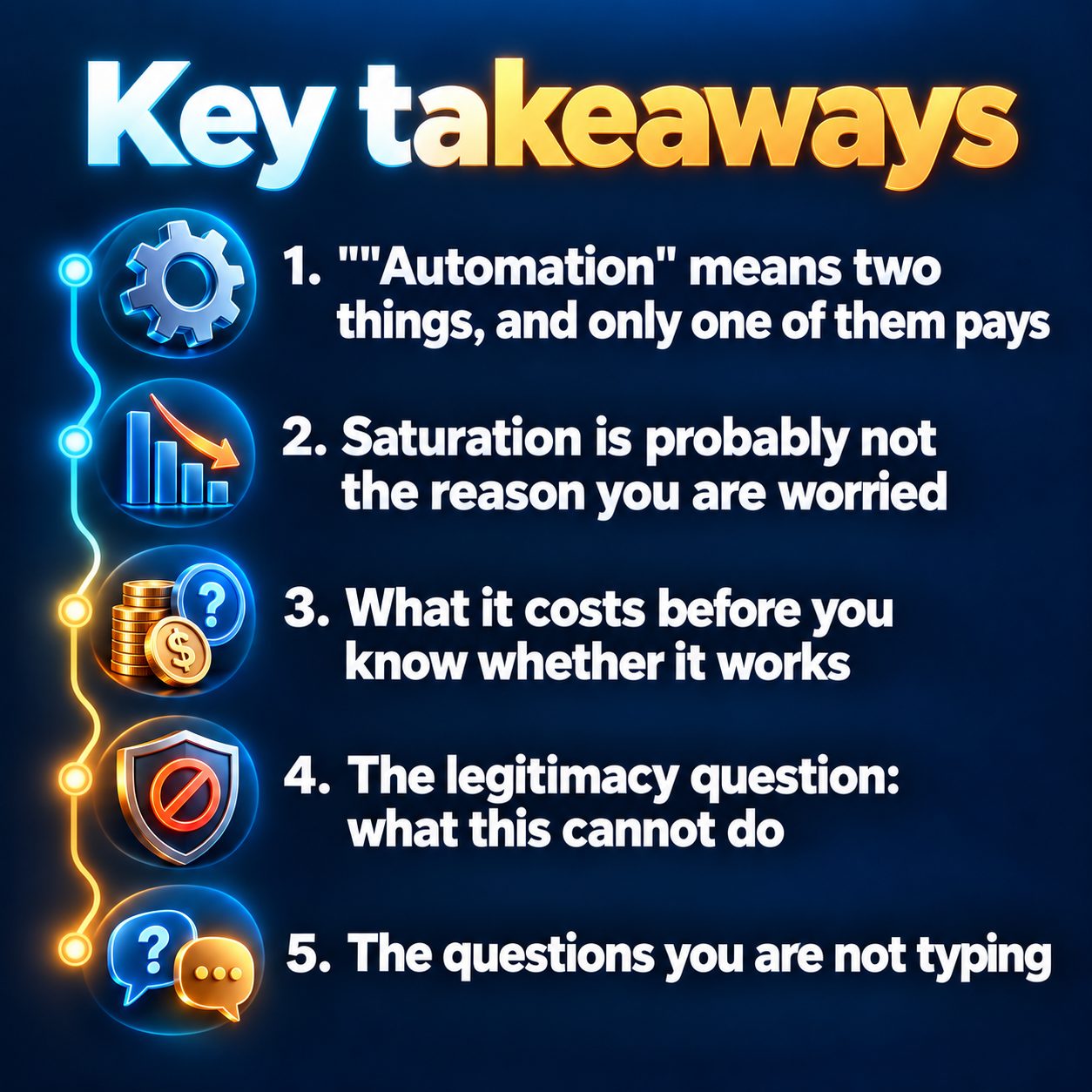
What it costs before you know whether it works
Here is the part that deserves honesty, because it is the part you cannot evaluate from the outside.
The outsourced version has a monthly bill from day one and no feedback loop for weeks. The tooling version has a much smaller bill, but it still costs you attention: choosing topics, reading retention graphs, rewriting hooks that flopped.
And the timeline is longer than the pitch videos suggest. You will know within a couple of dozen videos whether your hooks hold people past the first few seconds, because that shows up fast in retention. You will not know whether the channel earns for months. Those are two different questions and people conflate them constantly.
One strategic note that matters more than most advice: if income is the goal, do not build only Shorts. YouTube's Partner Program has two doors, and they are not the same size. The long-form door is 1,000 subscribers plus 4,000 valid public watch hours in 12 months; the Shorts door is 10 million Shorts views in 90 days, both listed in YouTube's own eligibility page. Long-form also earns far more per view. Shorts are excellent for getting discovered. Longer videos are where the revenue lives. A sane plan uses both.
The legitimacy question: what this cannot do
Your scam radar is working correctly, so let me be blunt about the limits.
No platform down-ranks a video for being AI-made. TikTok, Instagram and YouTube rank short video by viewer behaviour: watch time, completion, shares. Production method is not an input. What does get punished is the spam pattern people associate with automation: near-identical files posted across many accounts, mass uploads of the same thing with a word swapped, thin content with no point of view.
YouTube is explicit about this on the money side. Its inauthentic content policy says mass-produced and repetitious content is not eligible for monetization. That is not an anti-AI rule. It is an anti-slop rule, and it is the single biggest reason automated channels get rejected from the Partner Program. If your channel would embarrass you to show a friend, it will probably fail review too.
There is also a disclosure rule. If your video contains realistic synthetic media that could be mistaken for real events or real people, YouTube requires you to label it. The label does not hurt distribution. Skipping it can get the video removed.
And the honest ceiling: no tool picks your niche, knows your audience, or tells you which of your first videos was actually interesting. Software removes the labour. Taste is still yours, and taste is the part that decides whether this works.
The questions you are not typing
"Will people judge me for AI content?" Viewers who like the video do not investigate how it was made. Other creators might. Nobody who watches faceless history or sleep-story channels is asking who edited them. Make something worth the sixty seconds and the question dissolves.
"Am I too late?" You are late to 2019. You are early to whatever you specifically would make. The people who look untouchable now published through months when nothing worked.
"What if I stop after two weeks?" Probably the most useful question here. So design for it. Do not commit to a niche you find boring, do not commit to a cadence you cannot hold, and remove as much manual work as you can before motivation runs out, not after.
A first month that actually tells you something
Week 1: pick one narrow niche and write down who watches it and why. Then write 20 topics. If you cannot reach 20, that is your answer about the niche, and it is a cheap lesson.
Weeks 2 to 4: post one video a day, same niche, same format. Do not redesign anything mid-month. You are gathering data, and the algorithm is gathering it about you at the same time.
End of month: look only at retention in the first few seconds. Keep the hook shapes that held people, kill the ones that did not. Then decide whether to continue.
This is where a tool earns its place. MaqtAi takes a niche and a topic and produces the finished vertical video: script, AI voiceover, moving visuals, animated captions. Its Autopilot and scheduling features work from a topic queue on a cadence you set, and by default every finished video waits for your one-tap approval, so nothing publishes without a human looking at it. That approval step is not a formality. It is exactly the judgement the platforms expect you to be applying.
The cost of deciding for another month
Waiting is not neutral. A channel that does not exist accumulates no watch data, so the algorithm never learns who to show you to. The hook instinct that only comes from watching your own retention graphs does not develop. And somebody in your niche is posting today, which means they will be a month further along than you whenever you start.
The smallest useful step is not committing to a business. It is making one video and watching it back. New accounts get free credits after verifying their email, no card, which is enough to see whether the output is something you would actually post under your own name. That answers more than another week of research will.
Doing this by hand is the part most people quit at. MaqtAi writes the script, narrates it, generates the visuals and captions, and assembles the faceless short for you. Verify your email and you get 450 free credits: about 3 videos on the still-frame tier, or one with AI motion. Free renders carry a watermark.
Try it on your niche freeFrequently asked questions
Is YouTube automation allowed by YouTube? Yes. Faceless and AI-assisted channels are permitted. What is not permitted for monetization is mass-produced repetitious content, per YouTube's inauthentic content policy, and realistic synthetic media must be disclosed.
Do I need to show my face or record my voice? No. Faceless channels run on narration and visuals, and tools like MaqtAi generate both, so you never appear on camera or record audio.
Should I start with Shorts or long-form? Shorts for discovery, long-form for revenue. The long-form monetization path is more reachable and pays far more per view, so most people use Shorts to build an audience and longer videos to earn from it.
How long before a faceless channel makes money? Months, realistically, and for many channels never. You will learn whether your hooks work within a few weeks of daily posting, which is a faster and more useful signal than revenue.
Results vary. Nothing here is a guarantee of income.