
The real problem is not finance, it is sameness
Finance is one of those niches where people say the same five things forever. Budget. Invest early. Avoid debt. Build an emergency fund. None of that is wrong, but it is too broad for short-form.
A good finance faceless channel needs a promise the viewer understands in the first second. Not a huge life plan. One useful thing. One tiny correction. One story that makes money feel less confusing.
That is good news if you do not want to be on camera. Finance content does not need your face as much as it needs clarity, rhythm, examples, and a point of view. The viewer is not thinking, where is the creator? They are thinking, is this worth finishing?
10 short-form finance faceless channel ideas
Money mistakes in plain English. This works because people recognize themselves quickly. The format is simple: name the mistake, show the consequence, give the better move. First video idea: "The subscription trap that makes your budget look fine until rent is due." It is doable without filming because you can use animated receipts, phone-style visuals, captions, and narration.
Beginner investing vocabulary. Finance has a language problem. Short videos can translate one term at a time without turning into a lecture. First video idea: "What an index fund is, explained like a grocery basket." You can make it faceless with simple visual metaphors, charts, labels, and a calm voiceover.
Salary stories without naming names. People like realistic money scenarios because they help them compare choices without asking awkward questions. First video idea: "A 28-year-old making decent money but still feeling broke, where the cash is leaking." Keep it fictional and educational. Use anonymized budgets, animated categories, and clear disclaimers that it is an example, not personal advice.
Finance myth busting. This format works because it creates instant tension. The viewer has heard the claim before, and now they want to know if it is true. First video idea: "Buying cheap is not always saving money." You can build it with side-by-side visuals, short examples, and captions that land the twist.
Tiny business money lessons. This is useful for side hustlers, freelancers, and small creators. The videos can explain pricing, cash flow, invoices, taxes at a general level, or why revenue is not the same as profit. First video idea: "Your $500 client is not really $500 if you forget these costs." No filming needed: use invoices, dashboards, product shots, and motion graphics.
Personal finance quizzes. Quizzes are built for short-form because they give people a reason to pause and guess. First video idea: "Which costs more over time: the cheaper car with repairs or the pricier reliable one?" You can make it faceless with countdowns, multiple-choice cards, and a reveal.
Financial history mini-stories. Stories make finance less preachy. You can cover bubbles, bankruptcies, scams, invention moments, or old money habits. First video idea: "The time a simple rumor helped crash confidence in a bank." Use archival-style visuals, map motion, dramatic captions, and narration. Stay careful with facts and cite sources in your video description when covering real events.
Product and app spending breakdowns. This is not about trashing products. It is about showing the true cost of a purchase, subscription, upgrade, or habit. First video idea: "What a $9.99 monthly app costs when you forget it for a year." The faceless format is natural here because screen-style visuals and animated numbers do most of the work.
Money psychology and behavior. People often know what they should do but do not know why they keep doing the opposite. First video idea: "Why payday makes you feel rich for 48 hours." Use simple scenes, text overlays, and voiceover. The point is recognition, not judgment.
Weekly finance news in normal language. This can work if you keep it narrow. Do not try to recap everything. Pick one story and explain why ordinary people might care. First video idea: "One money headline this week that affects borrowers." This format needs extra care because news changes fast, so verify before posting and avoid pretending uncertain outcomes are guaranteed.
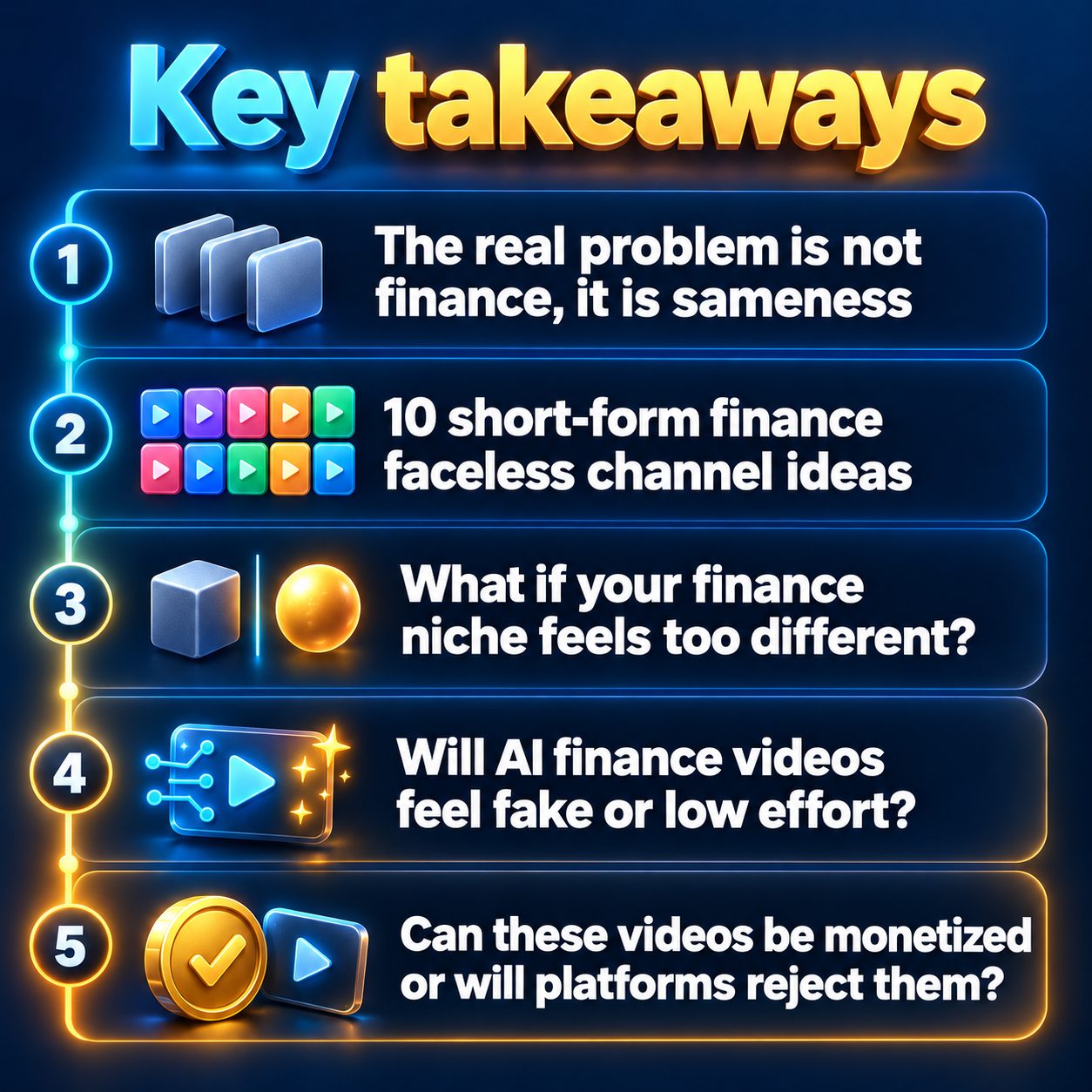
What if your finance niche feels too different?
That worry is fair. A channel about budgeting for students will not sound like one about small business cash flow. A channel for crypto beginners will not feel like one about debt payoff. The answer is not to make generic finance videos. It is to pick a repeatable lens.
Try finishing this sentence: "I explain money for people who..."
People who just got their first full-time job. People who run tiny online shops. People who hate spreadsheets. People who want to understand investing without feeling talked down to. People who are rebuilding after bad money decisions.
Once you know that, the ideas above stop being random. A myth-busting channel for freelancers becomes different from a myth-busting channel for new parents. Same format, different pain.
If you want more niche directions, MaqtAi keeps a list of faceless video categories and use cases on its use cases page, including finance-adjacent formats like startup stories, motivation, and business storytelling.
Will AI finance videos feel fake or low effort?
They can, if the script sounds like a fortune cookie and the visuals are just generic cash flying across the screen. Viewers can feel that.
But faceless does not mean careless. The best finance shorts usually have a clean structure: a sharp hook, one concrete example, one takeaway, and no fake certainty. That last part matters. Do not promise returns. Do not act like one habit fixes everyone. Do not turn complex financial choices into magic.
There is also a trust issue. Finance is personal. If your content sounds smug, people leave. If it sounds clear and grounded, they may stay. A faceless channel can still have a voice. It just does not need your face.
This is where a tool can help with production, but it cannot supply judgment for you. MaqtAi can write a hook-first script, generate narration, visuals with motion, animated captions, and assemble a vertical video from your niche and topic. You still choose the angle, review the message, and avoid claims you cannot stand behind. The feature tour is useful if your main friction is scripting, captions, scheduling, or publishing.
Can these videos be monetized or will platforms reject them?
Do not build the channel around monetization first. Build it around usefulness and consistency first. Monetization rules depend on the platform, the account, the content, and whether the videos are original enough to be worth watching.
AI-made does not automatically mean disallowed. What hurts a channel is spammy behavior, near-duplicate posting, weak openings, misleading claims, or ignoring disclosure rules for realistic synthetic media. A finance channel also needs extra care because viewers may treat your content as advice. Keep it educational, use plain examples, and avoid telling strangers exactly what to buy or do with their money.
A practical rule: before you post, ask whether the video would still be useful if the viewer never bought anything, clicked anything, or followed you. If yes, you are closer to durable content.
The small workflow that keeps you from quitting in two weeks
Most people do not fail because they picked the wrong finance idea. They fail because every video feels like starting from zero.
Use a repeatable weekly rhythm:
Monday: one mistake video.
Tuesday: one vocabulary explainer.
Wednesday: one quiz.
Thursday: one story.
Friday: one product or spending breakdown.
Then repeat. You are not trying to create a masterpiece every day. You are trying to give the algorithm and the audience enough consistent signals to learn what they respond to.
Start with one series, not ten. If your first idea is money mistakes, make five variations before judging it. Change the hook. Change the example. Change the audience. Do not change the entire channel every time one post is quiet.
If production is the part slowing you down, MaqtAi's workflow goes from topic to generated video to review and publishing, and new users who verify their email get free credits with no card required. The details are on pricing, including how credits work. That makes the first test small enough to stop overthinking.
Doing this by hand is the part most people quit at. MaqtAi writes the script, narrates it, generates the visuals and captions, and assembles the faceless short for you. Verify your email and you get 450 free credits: about 3 videos on the still-frame tier, or one with AI motion. Free renders carry a watermark.
Try it on your niche freeFrequently asked questions
What is the best finance faceless channel idea for beginners? Start with money mistakes or beginner vocabulary. Both are easy to explain in short clips, and you do not need advanced visuals or personal filming.
Can I make finance videos without giving financial advice? Yes. Focus on education, examples, definitions, habits, and questions to consider. Avoid telling viewers exactly what to buy, sell, or invest in.
Do I need to show my face for a finance channel to feel trustworthy? No. Trust can come from clear examples, honest limits, consistent formatting, and avoiding exaggerated promises. Your face can help, but it is not the whole product.
How many ideas should I test before changing niches? Test a small series first. Make several videos around the same format so you can learn whether the hook, topic, or packaging is the issue before abandoning the niche.
Waiting costs you real learning. The channel does not grow while it sits in your notes. The algorithm gets no data. Someone else in your niche is posting the simple version today. Pick one idea, make the first video, and let the next decision come from what actually happens.
Results vary, and nothing here is a guarantee of income.