
Where the money actually comes from
When people search this, they usually picture TikTok paying them for views. That can happen, but it's one of several paths, and it isn't the first one you'll unlock.
These are the main ways faceless accounts earn:
- Creator Rewards Program. TikTok pays for qualified views on videos longer than one minute, but only once your account passes its follower and view requirements. Those requirements change, so check the current ones in the app under Creator tools rather than trusting a blog post (including this one).
- TikTok Shop affiliate. You make videos about products and earn a commission when someone buys through your link. Product demos, comparisons and "things I wish I knew before buying" work fine as voiceover over visuals.
- Brand deals. Brands care about whether your audience fits them. A tight niche with engaged viewers can beat a bigger, messier account, and they rarely need your face on screen.
- Your own thing. A guide, a template, a service, a newsletter. Some faceless accounts exist to point people at one of these.
There's a quiet bonus too. The same vertical video can go up on YouTube Shorts and Instagram Reels, and each platform has its own monetization path. On YouTube, the Partner Program needs 1,000 subscribers plus either 4,000 watch hours in the last 12 months or 10 million Shorts views in the last 90 days. One video, three chances at an audience.
"But nobody trusts a voice with no face"
This is the big objection, and it's half right. Viewers do trust people. They just don't need to see you to trust you.
Think about what people actually watch in faceless niches: a history story told well, a money lesson that clears something up, a scary story that keeps them watching to the end. The trust comes from the content being useful or gripping, again and again. The voice and the style become the brand. Viewers remember "that account with the dark psychology breakdowns", not a face.
Where a face really helps is selling expensive stuff to strangers. If your plan is high-ticket coaching, a faceless account can be the top of the funnel, but you'll probably show up somewhere later. For affiliate products, brand deals and creator payouts, faceless is a normal way to run things.
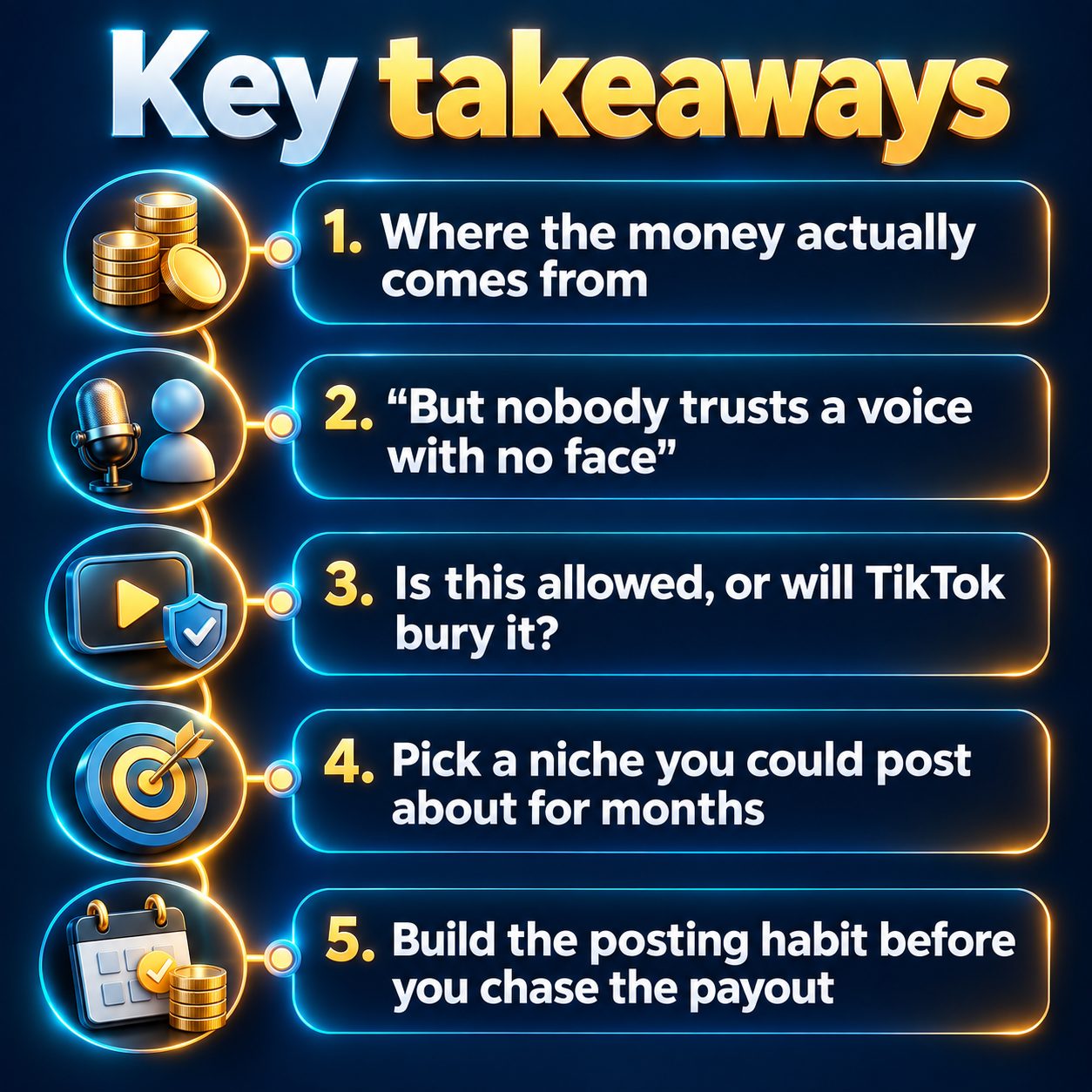
Is this allowed, or will TikTok bury it?
It's allowed. TikTok ranks videos by how viewers behave: how long they watch, whether they finish, like, share. How the video was made doesn't decide its reach.
What actually gets faceless accounts in trouble:
- Reposting other people's clips. Unoriginal content is a fast way to get limited or banned. Make your own.
- Near-identical mass posting. The same file across many accounts, or the same video with a new title, looks like spam because it is.
- Skipping the AI label. TikTok asks you to label realistic AI-generated content. The label is not a penalty. Ignoring the rule is the risk.
Now the honest limits, since your slop radar is probably pinging. No tool, AI or otherwise, picks a niche people care about for you. No tool guarantees views. A weak hook stays weak however polished the visuals are. AI takes away the filming and editing. It doesn't take away judgment.
Pick a niche you could post about for months
The niche matters more than the tool, the gear and the posting time put together. A good faceless niche has three things:
- Endless topics. If you can't list a couple of dozen video ideas in ten minutes, pick something wider.
- A reason to watch to the end. Stories, reveals, a question answered in the last line.
- A money path that fits. Personal finance suits affiliate links and digital products. Product reviews suit TikTok Shop. Storytelling niches suit longer videos for Creator Rewards.
Proven faceless picks include history, scary stories, stoic motivation, true crime, startup stories and bedtime content. You can browse more by niche and creator type. One warning: true crime and dark psychology need real sources and some taste. Sensational, careless takes get reported, and they burn out an audience fast.
Build the posting habit before you chase the payout
Here's the plan I'd give a friend starting from zero:
- Week 1: Pick the niche. Write a list of topics. Make and post your first videos, even if they're rough.
- Weeks 2-4: Post 1/day if you can keep it up, three times a week if you can't. Keep them 15 to 30 seconds while you learn which hooks hold people.
- After that: See which topics people finished and shared. Make more like those. Start testing videos over a minute if Creator Rewards is your goal.
The first sentence does most of the work. Open with the most surprising claim, the question, or the moment of danger. Never open with "Hey guys, today we're going to talk about."
Most people quit here because of the grind, not a lack of talent. Scripting, recording a voiceover, finding visuals and captioning every day takes more energy than a side project gets. This is where a tool like MaqtAi fits. You give it a niche and a topic, and it writes a hook-first script, narrates it with an AI voice, generates moving visuals, adds animated captions and assembles a vertical video. You can edit any line first or paste your own script. On paid plans, publishing and scheduling can handle the posting too. One honest note: TikTok posts currently arrive in your TikTok inbox as a draft, and you tap post in the app to finish.
The questions you don't say out loud
"Am I too late?" New accounts get shown to people every day, because the feed tests videos on viewers regardless of follower count. What's crowded is lazy content. Good content in a clear niche still finds people.
"Will people judge me for using AI?" Viewers judge boring videos. A useful or gripping video with an AI voice gets watched. A dull one with a human voice gets swiped. Label realistic AI content honestly and let the work speak.
"What if I stop after two weeks?" Then you'll have learned something cheaply, and that's fine. The trick is to make quitting less likely by keeping each video small. If making one takes an evening, you'll stop. If it takes a few minutes of choosing and reviewing, you won't.
What waiting actually costs
Nothing dramatic happens if you wait. That's the problem. The account you'd have started this month stays empty. The feed learns nothing about who your videos are for. And someone in your niche posted again today and will tomorrow. Every week of "researching" is a week of data you don't have.
So take one small step: make one video. Not a channel strategy, not a logo, just one video on one topic in the niche you're leaning toward. New MaqtAi accounts get 450 free credits when they verify their email, and no card is needed (see how credits work). On the free plan you can download the finished video and post it to TikTok yourself. That removes the last excuse between you and finding out whether this niche is yours.
Doing this by hand is the part most people quit at. MaqtAi writes the script, narrates it, generates the visuals and captions, and assembles the faceless short for you. Verify your email and you get 450 free credits: about 3 videos on the still-frame tier, or one with AI motion. Free renders carry a watermark.
Try it on your niche freeFrequently asked questions
Can I join TikTok's Creator Rewards Program with a faceless account? Yes. Eligibility depends on your account meeting TikTok's follower, view and content requirements, not on showing your face. Check the current rules in the app under Creator tools.
Do I have to label AI-generated videos on TikTok? TikTok asks creators to label realistic AI-generated content. The label doesn't reduce reach, but ignoring the rule risks removal.
Is it better to post only on TikTok or cross-post? Cross-posting the same original vertical video to YouTube Shorts and Instagram Reels gives each video more chances to find viewers and opens more monetization paths. Just don't post identical files across many accounts on the same platform.
Do I own the videos I make with MaqtAi? Yes. Videos you generate are yours to post, monetize and use commercially on your own channels.
Results vary, and nothing here is a guarantee of income.