
Your finance niche is not too narrow, it is probably too broad
The most common mistake is starting with "finance" as the niche. That is too big. Nobody opens TikTok, Reels, or Shorts thinking, "I hope I see finance content." They stop because a video names a problem they recognize.
So instead of making a channel about money, make a channel about one type of money tension. New workers trying to save. Parents explaining money to teens. Beginners scared of investing. Small business owners watching cash flow. People trying to understand why groceries, rent, debt, or subscriptions keep eating their paycheck.
Finance works in short-form when the idea is simple enough to land in one sitting. The video should answer one question, explain one trap, or make one money behavior visible. If the viewer needs a spreadsheet to understand the point, it is probably not a short.
10 short-form finance video ideas you can make without filming
Beginner money mistakes. These work because almost everyone has made small money decisions they regret. First video: "The subscription you forgot is not the real problem." Doable without filming because you can use text-led scenes, simple visuals, receipts, calendars, and narration.
Personal finance stories. Story beats keep viewers watching longer than abstract advice. First video: "A person earns more, but still feels broke. Here is why." You do not need actors. A faceless format can use animated scenes, symbolic objects, and a voiceover.
Scam and fraud explainers. Finance scams are emotional, urgent, and easy to frame as "watch out for this." First video: "The fake invoice scam that targets freelancers." You can show messages, warning signs, and step-by-step narration without showing your face.
Investing basics for total beginners. The audience is huge, but the angle must be humble. First video: "What people mean when they say index fund, without the jargon." Use diagrams, captions, and examples. Avoid pretending to give personalized financial advice.
Credit score and debt myths. This niche works because people search for answers after something stressful happens. First video: "Paying the minimum is not the same as being fine." You can use simple animated balances, due dates, and clear narration.
Business money lessons from famous companies. This blends finance, history, and curiosity. First video: "Why a profitable company can still run out of cash." You can explain with timelines, charts, and story visuals instead of filming yourself.
Consumer product money breakdowns. People like seeing the real cost behind normal purchases. First video: "The true cost of buying a cheap printer." Use product images you are allowed to use, generated visuals, or generic category visuals with captions.
Side hustle math. This works because people want the truth before they waste time. First video: "A side hustle can look profitable until you count these costs." You can make the whole video with numbers on screen, voiceover, and examples.
Economic news in plain English. Viewers want context, not a lecture. First video: "Why interest rate news matters to a regular borrower." Keep it evergreen when possible, or cite public sources when discussing current events.
Money quizzes and curiosity hooks. Quiz formats lower the pressure and invite comments. First video: "Which costs more over time: a late fee, a high-interest balance, or an unused subscription?" You can build these from captions, countdowns, motion, and reveal scenes.
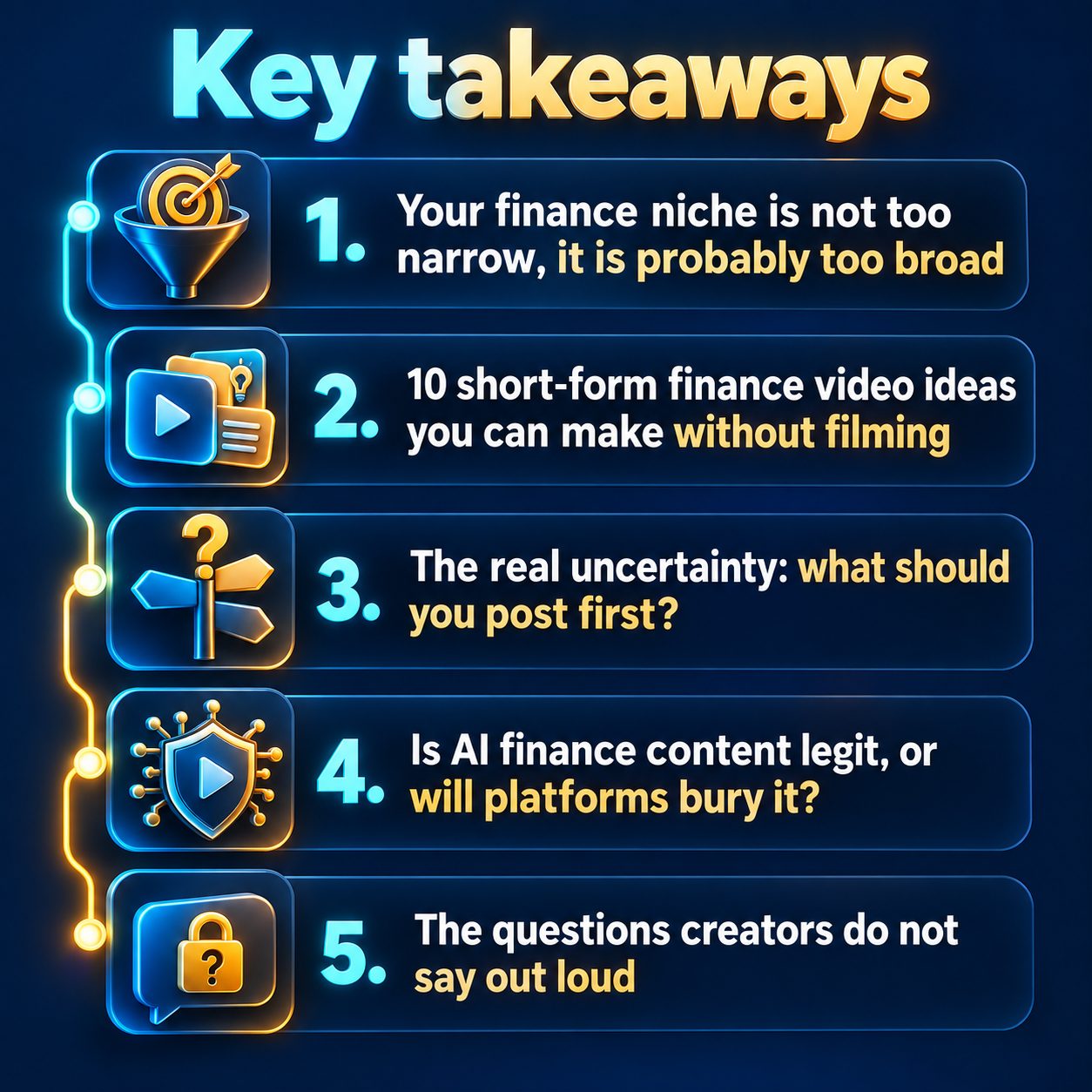
The real uncertainty: what should you post first?
Start with the idea that is easiest to repeat, not the one that sounds most impressive.
A finance channel grows through pattern recognition. The platform needs signals. You need signals too. If you post one debt tip, one crypto rant, one business documentary, and one budgeting skit, you will not know what worked. You will only know that four unrelated videos behaved differently.
Pick one lane for your first batch. For example, choose beginner debt myths, small business money lessons, or scam explainers. Then make several videos with the same promise and different topics. Keep the structure similar enough that you can compare hooks, pacing, and comments.
The best first video is usually the one where you can write the clearest first sentence. "You are not bad with money, your bills are badly timed" is stronger than "Budgeting tips for beginners." The first one names a lived problem. The second sounds like homework.
Is AI finance content legit, or will platforms bury it?
AI-made does not automatically mean low reach. Platforms care about viewer behavior and policy compliance. The weak version of AI finance content is mass-produced, repetitive, and vague. The useful version is specific, checked, clearly framed, and made for a real audience.
YouTube requires creators to disclose realistic altered or synthetic content in relevant cases, according to its altered or synthetic content policy. YouTube also warns that inauthentic or mass-produced content can affect monetization under its channel monetization policies. TikTok says creators must label AI-generated content that includes realistic images, audio, or video in its AI-generated content guidance.
That does not mean you cannot use AI. It means your channel should not feel like copied templates sprayed across accounts. In finance especially, be careful with claims. Do not promise returns. Do not imply certainty. Do not present personal advice as if it fits every viewer. A helpful finance short should make one concept clearer, then leave room for the viewer to apply judgment.
The questions creators do not say out loud
Will people judge you for using AI? Some will. Most viewers care more about whether the video respects their time. If the hook is honest, the explanation is clear, and the content is not pretending to be a real human experience you never had, the format becomes less important.
Are you too late? No, but you are too late to win with generic advice. "Save more money" is dead on arrival. "The weekly grocery habit that breaks most budgets before rent is due" has a chance because it gives the viewer something specific to inspect.
What if you stop after two weeks? Then you learned that your system was too heavy. That is the real risk with finance channels. The idea is not the hard part. The hard part is turning ideas into scripts, visuals, captions, and posts without burning out.
That is why your first workflow matters. If every video requires research, recording, editing, caption timing, exporting, and posting, consistency becomes fragile. Keep the format simple enough that you can repeat it on a normal day.
Start with one video, not a whole brand
You do not need a perfect logo, a complete content calendar, or a monetization plan before posting. You need one clean finance idea that a viewer can understand in seconds.
Pick one of the ideas above. Write a hook. Make the explanation concrete. Add a clear disclaimer if the topic could sound like personal financial advice. Then publish and watch what people do: where they stop, what they comment on, and whether the idea deserves a second version.
If the friction is production, MaqtAi is a practical way to remove it late in the process. You give it a niche and topic, then it creates a faceless vertical video with script, AI voiceover, animated visuals, captions, and publish-ready formatting. You can also explore niches on the use cases page, see the creation flow on how it works, and check the free-start credit details on pricing.
Waiting has a real cost. Your channel stays empty. The algorithm gets no data. The creator posting simple finance explainers every day gets more practice while you keep deciding. Make one video first, then let the next decision come from evidence.
Doing this by hand is the part most people quit at. MaqtAi writes the script, narrates it, generates the visuals and captions, and assembles the faceless short for you. Verify your email and you get 450 free credits: about 3 videos on the still-frame tier, or one with AI motion. Free renders carry a watermark.
Try it on your niche freeFrequently asked questions
Can I make finance videos without showing my face? Yes. Finance is one of the better faceless categories because many ideas can be explained with narration, captions, charts, objects, screenshots, and simple animated scenes.
Do I need to be a financial advisor? Not if you stick to education, definitions, examples, and general concepts. Avoid personalized advice, income promises, and anything that sounds like a guaranteed outcome.
What finance niche should a beginner start with? Start with a niche where you can make repeatable videos: budgeting mistakes, scam warnings, credit basics, beginner investing terms, or business money stories.
Can MaqtAi make the first video free? New users who verify their email get free credits and do not need a card, so you can test a first faceless finance video before committing to a workflow.
Results vary, and nothing here is a guarantee of income.