You are not too late (and here is why)
The concern makes sense. You see established channels with millions of subscribers and wonder if there is any room left. But YouTube's recommendation system does not serve viewers one channel per topic. It surfaces individual videos based on what each viewer is likely to watch next. A brand-new video from a brand-new channel can appear right beside a clip from a million-subscriber creator if the topic, thumbnail, and retention earn it.
That means your real competition is not "every channel in the niche." It is every other video suggested alongside yours in a given session. A fresh, well-structured video on a trending sub-topic can outperform an older video from a bigger channel. This is how new faceless channels break through every week.
The ideas (organized so you can actually pick one)
Story-driven niches
These work because humans are wired for narrative. Watch time tends to be high, which YouTube rewards.
- Scary stories and horror narration. Creepy tales with atmospheric visuals and a deep narrator voice. The audience watches late at night, often binging multiple videos back to back.
- True crime breakdowns. Case summaries with maps, timelines, and public-domain photos. Viewers stay glued because they want to know how it ends.
- History's strangest moments. Forgotten events, bizarre coincidences, obscure figures. Each video is self-contained, so every upload can attract brand-new viewers.
- Startup and business stories. How companies rose, fell, or pivoted. Entrepreneurs and curious minds watch these on repeat.
Psychology and self-improvement
- Stoic motivation and philosophy. Marcus Aurelius quotes over cinematic visuals. This niche has massive Shorts audiences across all three major platforms.
- Dark psychology and persuasion. "How manipulation works" content. High curiosity clicks, strong watch time.
- Productivity and habit science. Practical tips delivered over clean animations. The scripts almost write themselves because each video covers one habit or framework.
Relaxation and ambient
- Bedtime and sleep stories. Soft narration over gentle visuals. Viewers press play and leave the video running, which means extremely long average view durations.
- Nature soundscapes and ambient loops. Rain on a window, forest streams, cafe sounds. Minimal scripting needed, high replay value.
Visual and creative
- Comic and illustrated stories. Original short tales told through illustrated panels with narration. Visually distinctive and highly shareable.
- AI art showcases. Transformations, style experiments, or "what would X look like as Y" concepts. Strong thumbnail appeal and very low production overhead.
Educational and explainer
- Science and space facts. "What would happen if..." hypotheticals with visualizations. Pure curiosity-driven clicks.
- Money and personal finance. Budgeting tips, investing basics, "how much does X cost" breakdowns. Advertisers pay well in finance categories.
- Tech explainers. How everyday technology works, explained simply with graphics and voiceover.
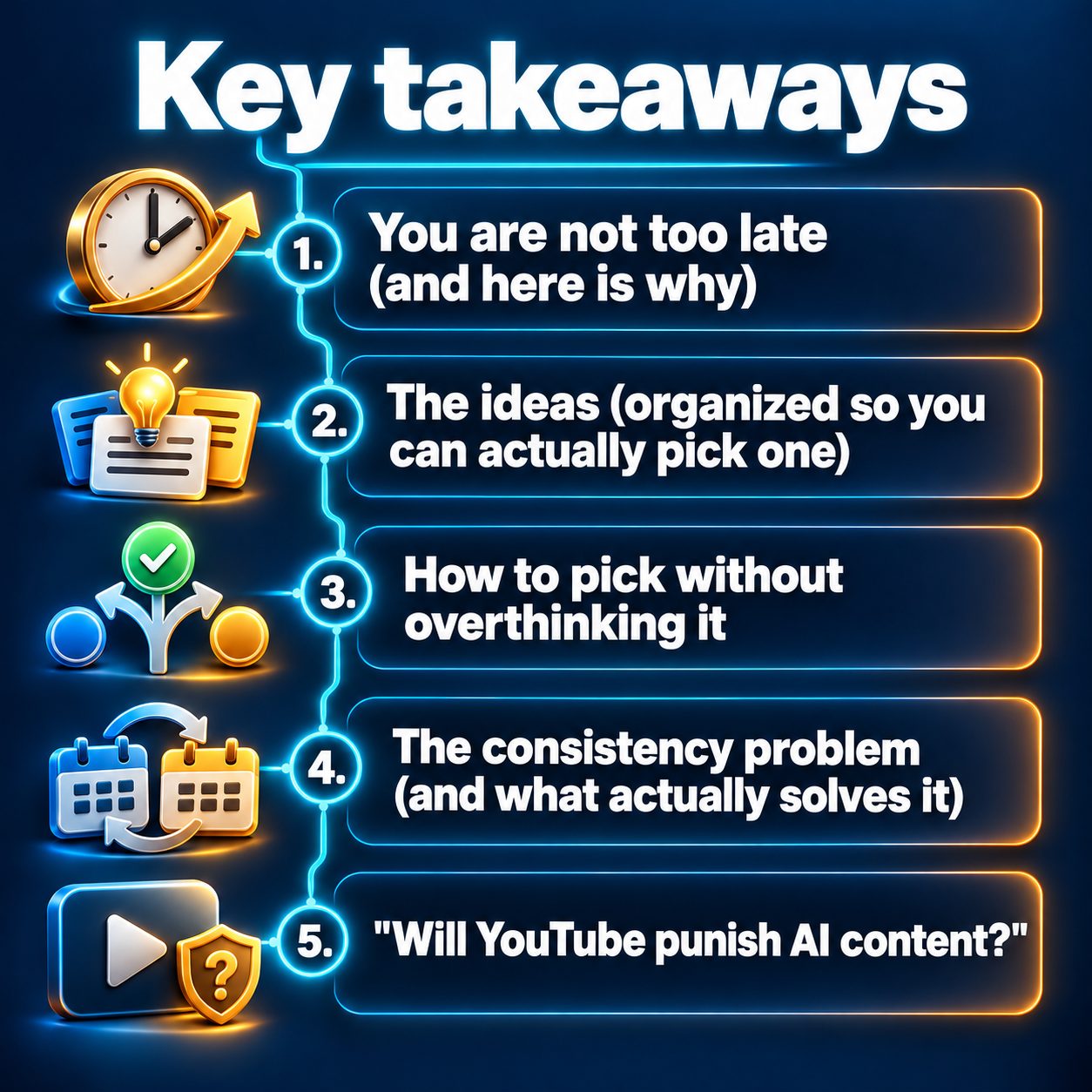
How to pick without overthinking it
Here is the honest filter. Ask yourself three questions:
- Could I come up with fifty topics in this niche without running dry? If you struggle at ten, you will burn out before the algorithm has enough data to work with.
- Does the audience watch Shorts on this topic? Search the niche on YouTube Shorts, TikTok, and Instagram Reels. If you see videos with strong view counts, the demand is real.
- Am I at least a little curious about this subject? You do not need to be an expert. But if the topic bores you completely, scripting and reviewing videos will feel like a chore, and you will quit.
Do not pick based on "highest CPM" lists alone. A niche you abandon after two weeks earns exactly zero.
The consistency problem (and what actually solves it)
Most faceless channels fail for one reason: the creator stops posting. Not because the niche was wrong. Not because the algorithm was unfair. They just could not keep up the production pace.
A single faceless video involves scripting, voiceover, visual creation, caption timing, and export. Done manually, that is hours per video. Multiply by daily posting across multiple platforms and you see the wall.
This is where automation matters. Tools that handle the full production pipeline turn a multi-hour workflow into something you can review over coffee. MaqtAi was built specifically for this: you pick a niche and topic, the AI writes a hook-first script, generates visuals with real motion, narrates with a realistic voice, adds animated captions, and on a paid plan can auto-publish to Instagram Reels and YouTube Shorts on a schedule, with TikTok destinations waiting in the approval queue. It covers 19 faceless niches including most of the ones listed above.
The point is not that you need any specific tool. The point is that consistency at scale requires a system, and the system should not cost you your evenings.
"Will YouTube punish AI content?"
This is the legitimacy question everyone asks quietly. YouTube's official guidance on AI-generated content requires disclosure when realistic synthetic media could mislead viewers (like a deepfake of a real person). But YouTube does not ban AI-assisted production. Faceless channels using AI voiceover, AI visuals, and AI scripts are not violating any policy as long as the content is original, provides value, and follows community guidelines.
What YouTube does penalize is low-quality mass spam: hundreds of identical, zero-effort videos with terrible retention. But that standard applies to human-made content too. Make something a viewer wants to finish watching and you are fine.
Your one small step
You have the list. You have the filter for choosing. The only thing standing between you and real data on what works is your first batch of videos.
Pick one niche from above. Write down five topics. Then make one video today. If the production part feels overwhelming, you can use your free credits on MaqtAi (just verify your email, no card needed: 450 credits, about three or four still-frame Express videos, watermarked and without a talking presenter) and have a finished video in a few minutes. Post it. See what happens. Then make another one tomorrow.
Every day you spend deciding is a day your channel has zero videos, zero data, and zero chance of reaching anyone. The algorithm cannot reward a video that does not exist.
Doing this by hand is the part most people quit at. MaqtAi writes the script, narrates it, generates the visuals and captions, and assembles the faceless short for you. Verify your email and you get 450 free credits: about 3 videos on the still-frame tier, or one with AI motion. Free renders carry a watermark.
Try it on your niche freeFrequently asked questions
Can a faceless YouTube channel actually be monetized? Yes. Faceless channels are eligible for the YouTube Partner Program under the same requirements as any other channel. You need to meet the subscriber and watch-hour (or Shorts views) thresholds. The content must be original and add real value; repetitive or reused content without meaningful commentary can be rejected.
Do I need expensive software to start a faceless channel? No. You can start with free tools for scripting and basic editing. As you scale, AI video tools can handle production and publishing without manual editing. Many offer free tiers or trials so you can test before spending anything.
What is the best faceless niche for beginners? There is no single best niche. Story-driven formats like scary stories, history, and true crime tend to be beginner-friendly because the structure is simple: tell a compelling story with visuals. Pick something you can sustain, not just something that looks profitable on paper.
How often should I post on a faceless channel? Daily posting gives you the most data fastest, but three to five times per week is a realistic starting pace. Consistency matters more than volume. A channel that posts three times a week for six months will almost always outperform one that posts daily for two weeks and then stops.
Results vary. Nothing in this article is a guarantee of income.