1. It can make the whole video, not just parts of it
A couple of years ago, "AI video" meant piecing together a pile of separate tools. One wrote the script, one did the voice, one found stock clips, one made captions, and then you needed an editor to put it all together. That's the part that made people quit.
Now the better tools do all of it at once. You give one a niche and a topic. It writes a short script with the hook up front, narrates it in a natural voice, creates visuals that actually move, puts captions on top and exports a vertical video sized for TikTok. You never appear on camera. You never record your voice. You don't have to open an editor unless you want to.
If "I'm not technical" is what's holding you back, this is good news. The skill that matters now is deciding what to make. You no longer need to know how to edit it.
2. TikTok doesn't bury a video for being AI-made
This is the worry I hear most: "Won't TikTok bury it?" No. TikTok ranks short videos by what viewers do when they see them. Do they keep watching? Do they finish it, like it, share it? That's what gets a video pushed. How it was made doesn't come into it.
Here's what does hurt you:
- A weak start. If the first line gives people no reason to stay, they swipe. TikTok reads that swipe.
- Spam patterns. Posting the same file on lots of accounts, or near-copies of one video over and over, looks like a content farm. That's because it is one.
- Skipping the AI label. TikTok asks creators to label realistic AI-generated content. The label isn't a penalty. Ignoring the rule is what can get a video taken down.
So "AI content gets no views" usually means "boring content gets no views." AI just makes boring content faster to post, and that's why so much of it flops.
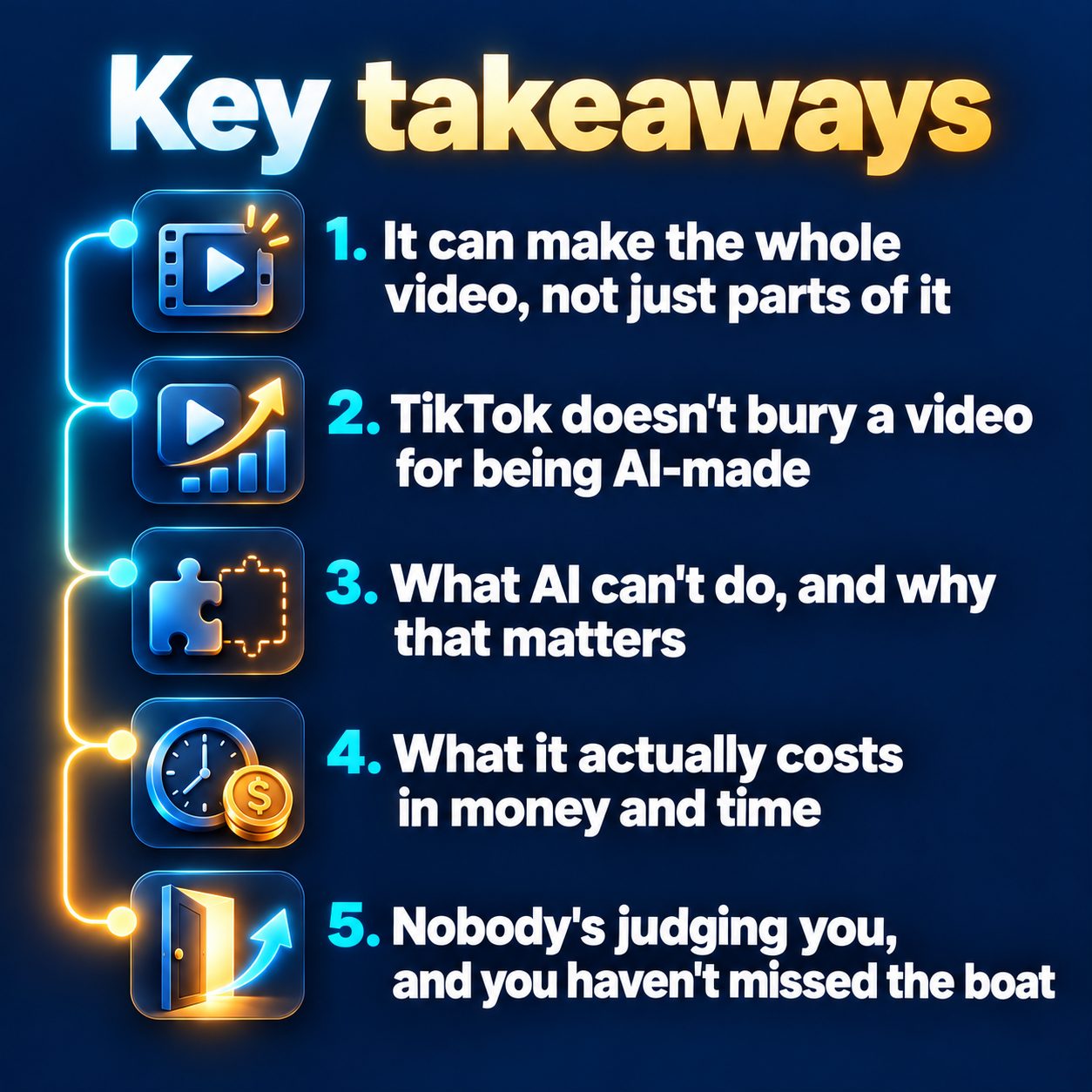
3. What AI can't do, and why that matters
Here's the honest list. Anyone who says AI does everything is trying to sell you something.
- It can't pick your niche. A tool will write about anything. You still have to decide whether people want scary stories, stoic quotes or startup history from you.
- It can't promise views. No tool can. Reach comes from viewers.
- It doesn't know your audience the way you do. A script can be clean and still miss what your viewers care about. Read it before it goes out.
- It can't rescue a tired topic. "Facts about space" has been done endlessly. A specific story nobody in your niche has told will beat it.
Think of AI as a production crew that never gets tired. You're still the one deciding what the show is about.
4. What it actually costs in money and time
Most AI video tools charge in credits or through a subscription. The details vary, so check two things before you commit. First, what does one video cost at the quality you'd actually post? Second, does the free tier add a watermark? Many do.
The bigger change is time. A video takes minutes to make instead of hours. What's left for you is the part worth your attention: picking topics, reading the script and choosing when to post.
That answers the question behind "what if I quit after two weeks?" Most faceless channels die from hassle, not bad ideas. If one video takes a whole evening, you skip a day, then a week. If it takes a few minutes to choose and review, posting on a schedule becomes something you can actually keep up.
5. Nobody's judging you, and you haven't missed the boat
Two things people wonder about but rarely type.
"Will people judge me for using AI?" Viewers judge whether the video was worth their thirty seconds. Plenty of big faceless accounts run on narration and generated visuals. Their comments are about the story, not the software. If the video is good, that's what people react to.
"Am I too late?" The first wave of AI TikToks was mostly low effort. So the bar isn't just using AI. It's using it well: a specific niche, a sharp hook and a steady schedule. That mix is still rare, and you can still go after it today.
6. How to make your first one this afternoon
Don't plan a whole channel yet. Make one video and see how it feels.
- Pick one niche you'd happily watch yourself. If you're stuck, browse niches that work well for faceless channels.
- Write down five topics. Specific beats broad. "The ship that vanished and came back" is better than "ocean mysteries."
- Make the first video. In MaqtAi you pick the niche and topic. It writes the script with the hook first, narrates it, animates the visuals, adds captions a few words at a time and puts it all together as a vertical video. That typically takes about 6 minutes. Nothing is generated until you press Launch, and you can change any line before then.
- Watch it like a stranger would. Would you keep watching after the first line? If not, rewrite the hook.
- Post it, then make the next one. Posting regularly will teach you more than any single video.
Honestly, the cost of waiting isn't dramatic. It's quiet. Every week you don't post is a week without viewer data and a hook you never tested. Meanwhile, the account in your niche that posts daily spends that week learning what works. The first video is the hardest, and it doesn't have to cost you anything. Verify your email and you get 450 free credits with no card needed. That's roughly 3 to 4 videos in the default still-frame style, or one with AI motion (see pricing). Free videos carry a watermark, so treat them as your test run.
Doing this by hand is the part most people quit at. MaqtAi writes the script, narrates it, generates the visuals and captions, and assembles the faceless short for you. Verify your email and you get 450 free credits: about 3 videos on the still-frame tier, or one with AI motion. Free renders carry a watermark.
Try it on your niche freeFrequently asked questions
Is it allowed to post AI-made videos on TikTok? Yes. TikTok allows AI-generated content and asks you to label realistic synthetic media. Keep each video original, and don't post copies of it across many accounts.
Can AI post to TikTok for me automatically? Some tools can. On a paid plan, MaqtAi posts straight to TikTok once you connect your account. Its Autopilot scheduler can't post to TikTok automatically yet, so TikTok videos wait in the approval queue for you to approve with one tap.
How long should an AI TikTok be? For stories and fact videos, 15 to 30 seconds is a good place to start. Keep it only as long as the story needs, and make sure the payoff comes before people lose interest.
Will the AI voice sound robotic? Good tools sound natural now. Listen to a few voice previews, adjust the speaking speed and pick a voice that fits your niche. A calm voice suits sleep content, and a sharper one suits true crime.